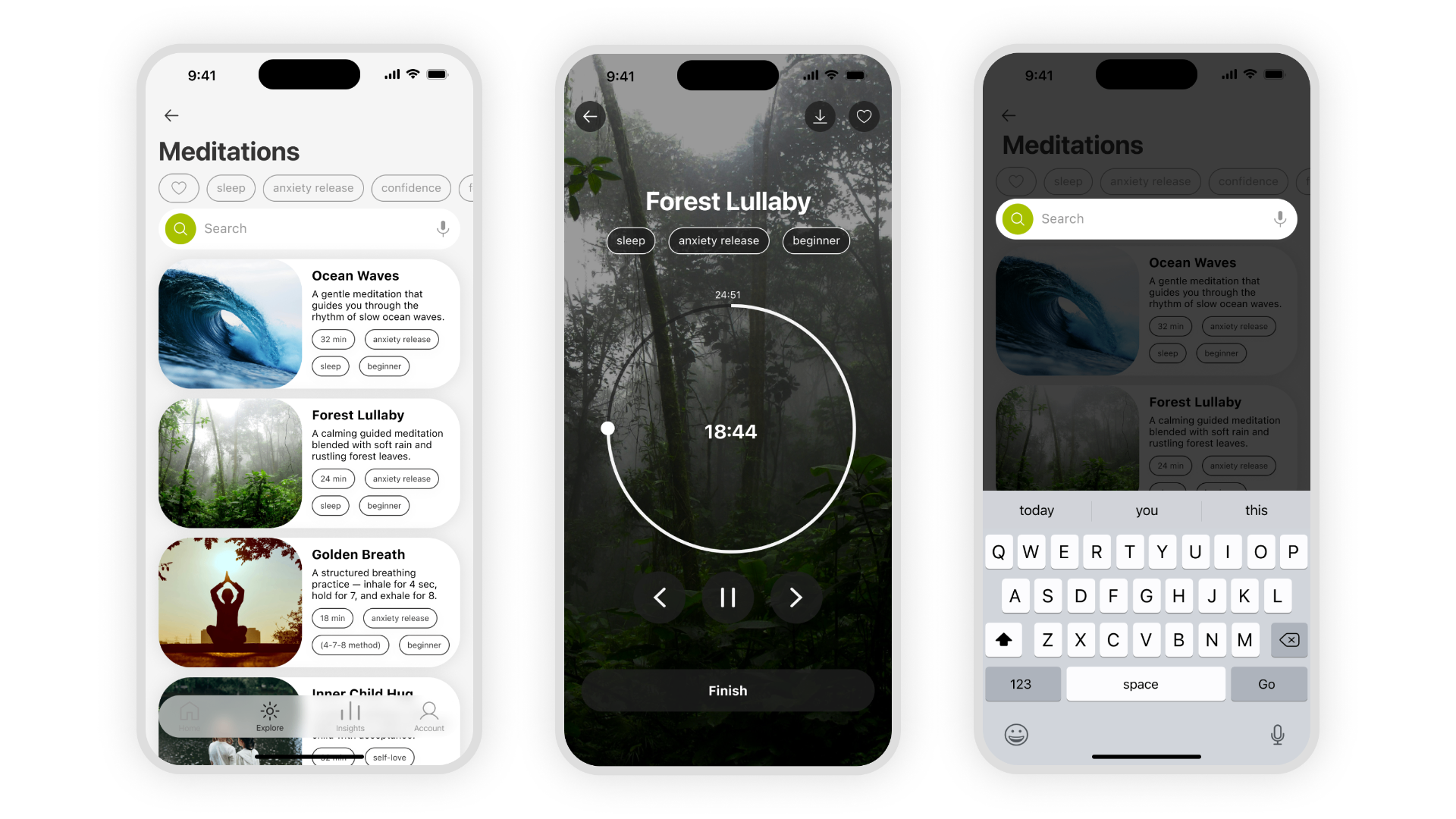
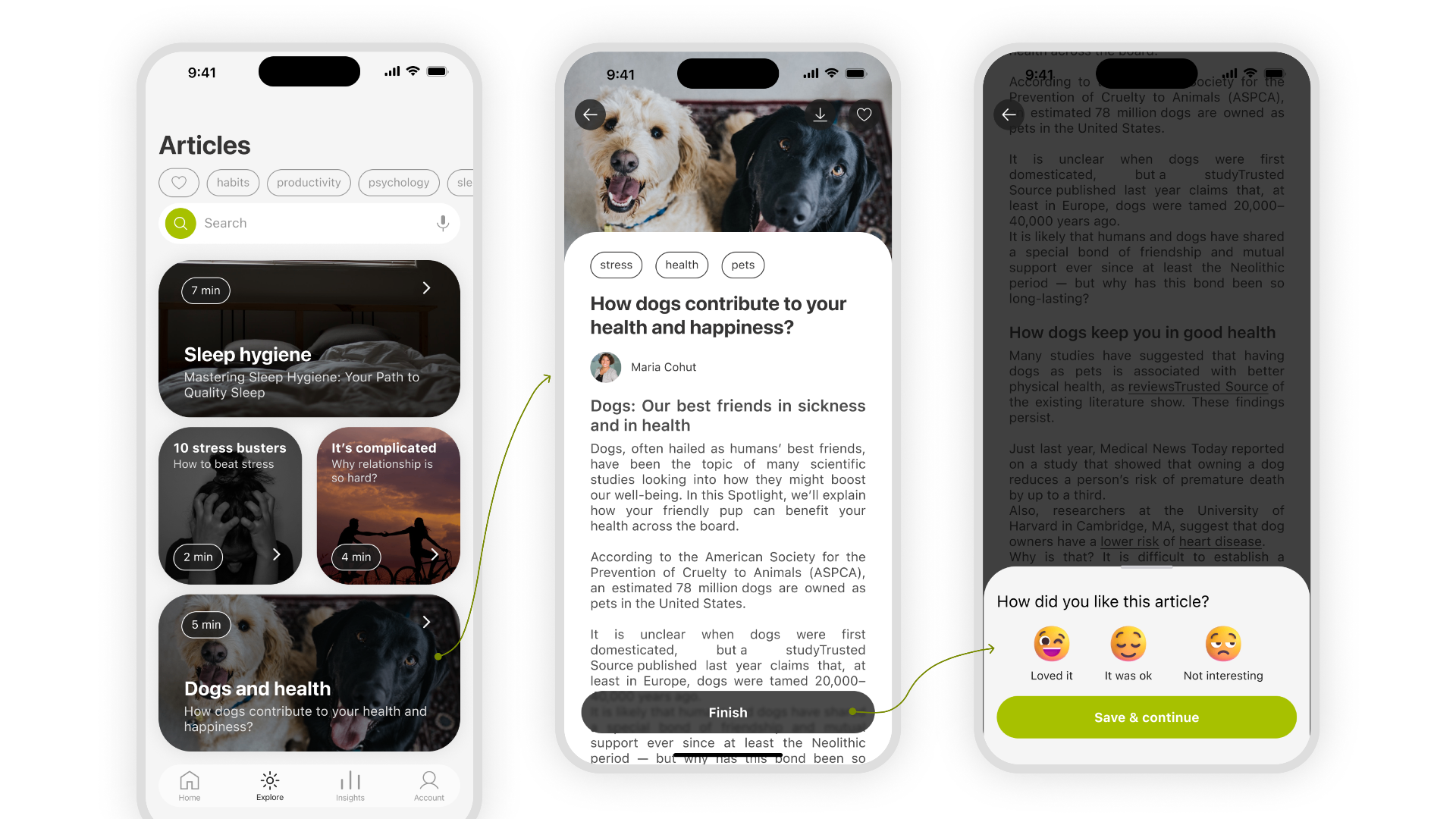
Moodwings — Mental Wellness App UX/UI
Context
Today many people are turning to psychologists and trying to take care not only of their physical health, but also their mental well-being. In cognitive behavioral therapy, psychologists often ask their clients to track their emotional state, for example by keeping a mood journal.
Problem
In everyday life, however, it's difficult for people to consistently notice and track their emotional state. Emotions change throughout the day, and there is often no time or habit to pause and reflect on them. Opening notes or writing things down each time requires extra effort, which makes the process harder to maintain. As a result, people either ignore their state until it worsens, or don't fully understand what they are feeling and why.
Task
To understand how people deal with their emotions in everyday life and identify opportunities to support them in a simple and accessible way.
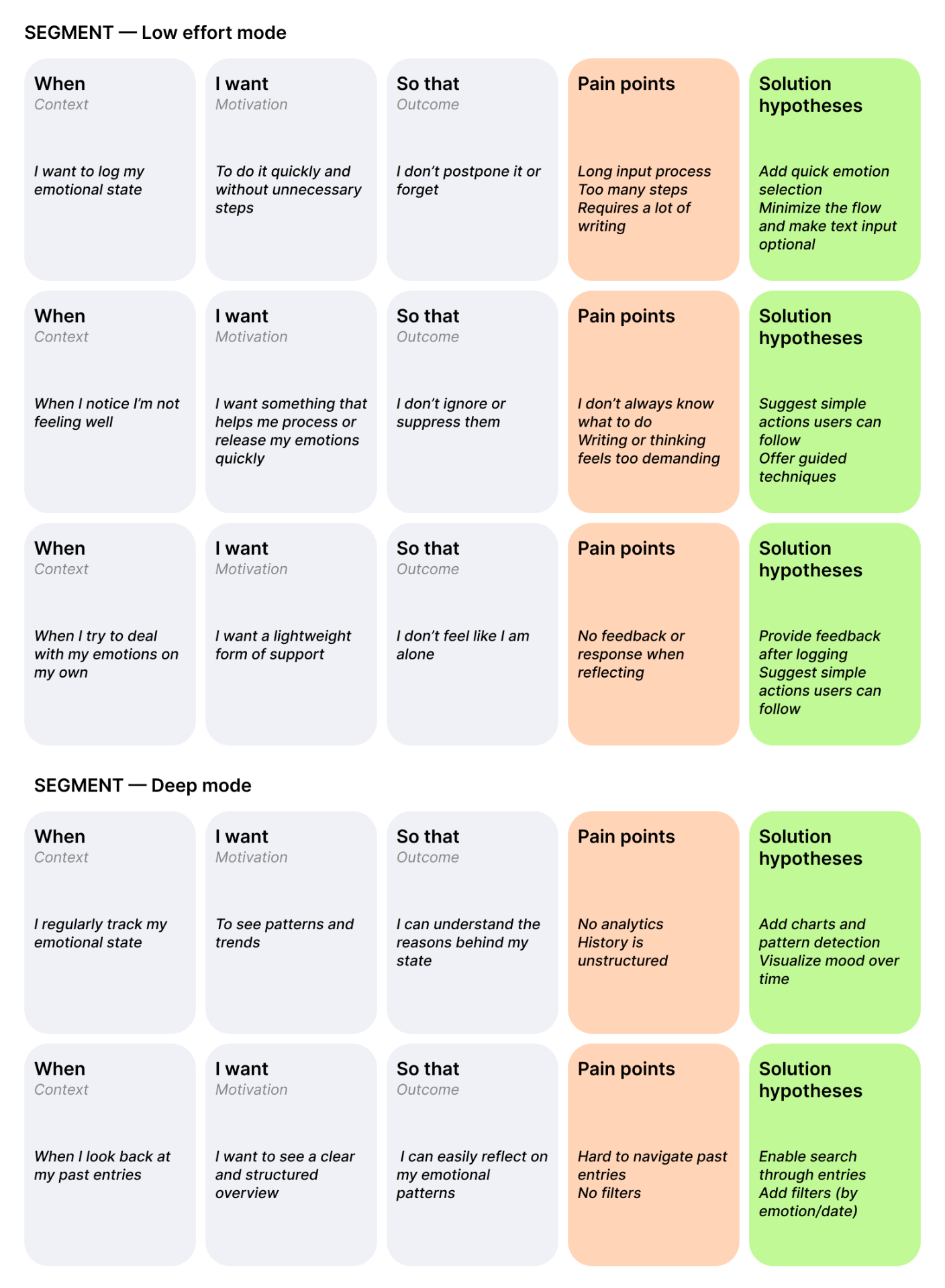
Jobs To Be Done
Based on user interviews and gathered insights, I formulated JTBD. They helped structure real user needs, identify key pain points, and define which solutions should be incorporated into the design.
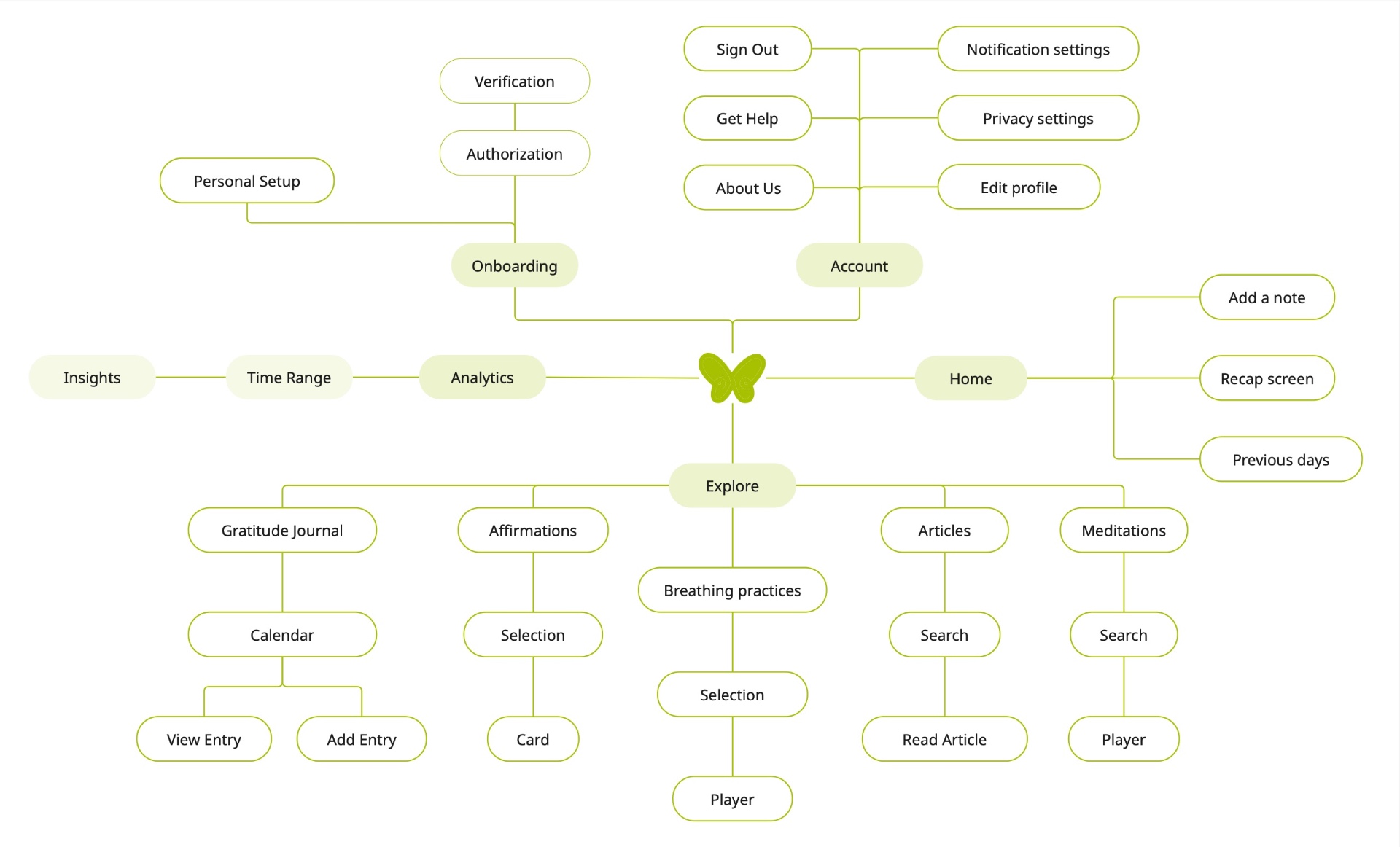
App Architecture
Wireframes
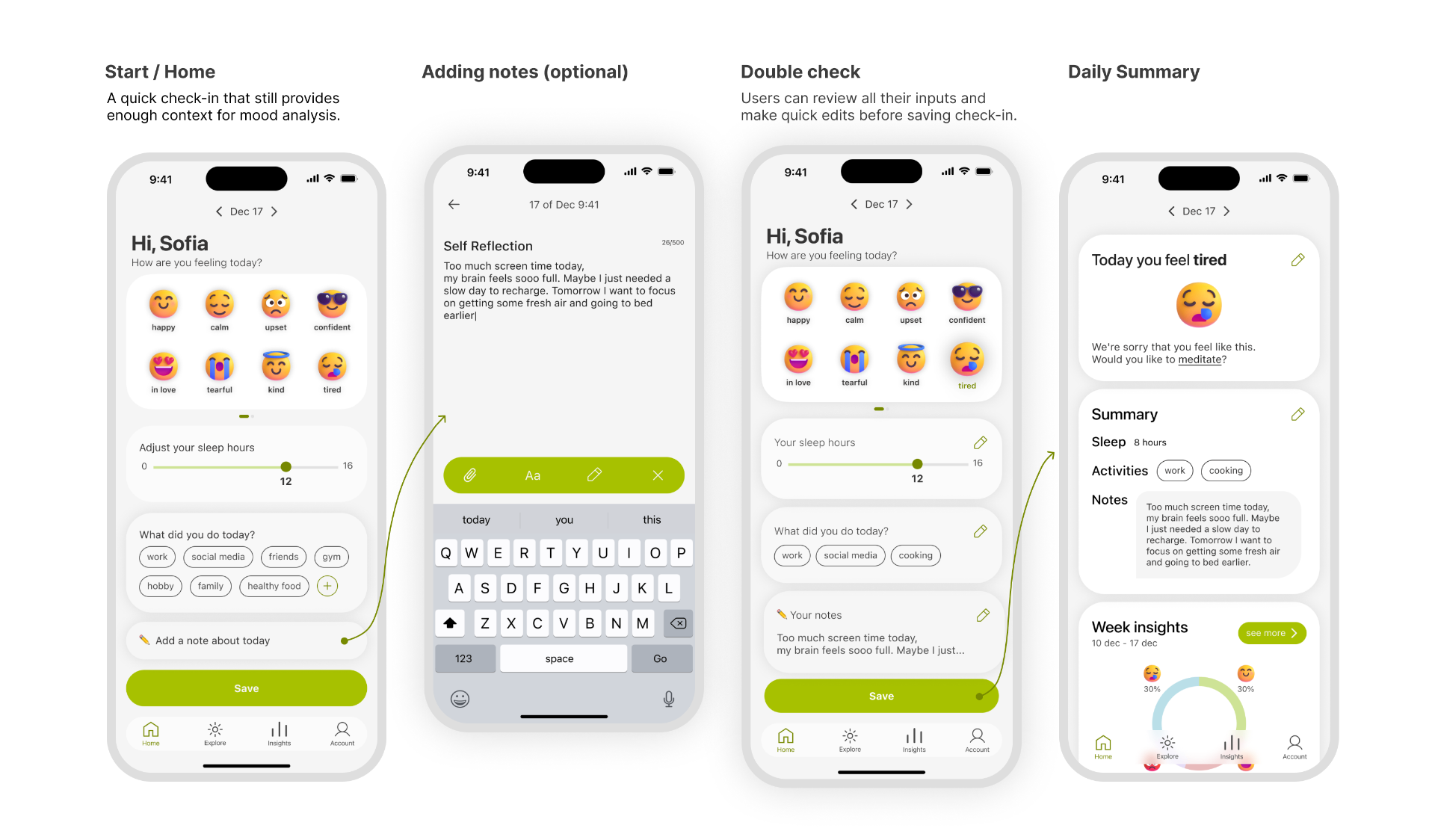
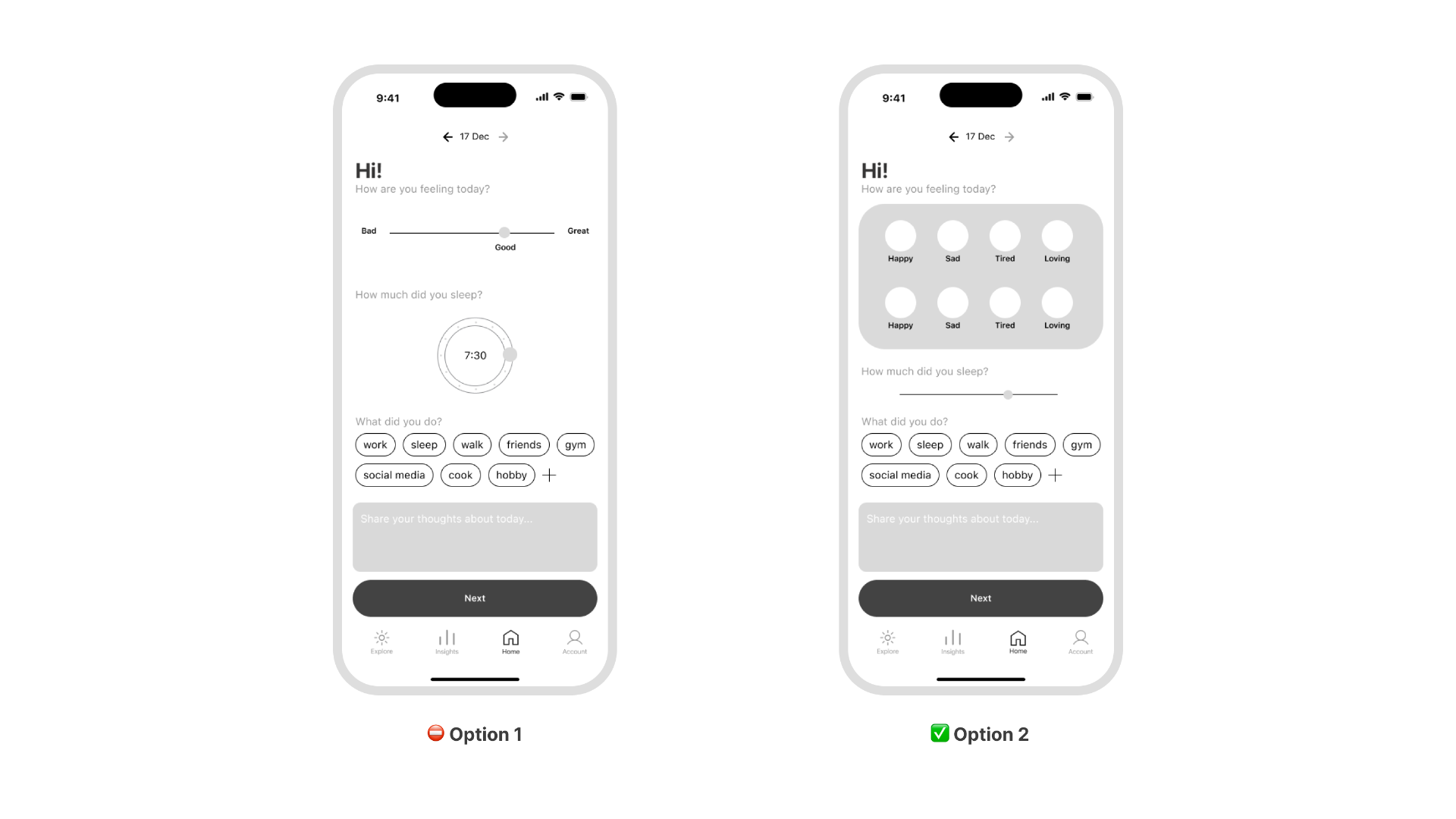
I explored two interaction patterns for the first screen and chose option 2 because it allows users to select multiple emotions, makes mood selection faster and more intuitive through emojis, and keeps the focus on the app's core action, tracking mood.
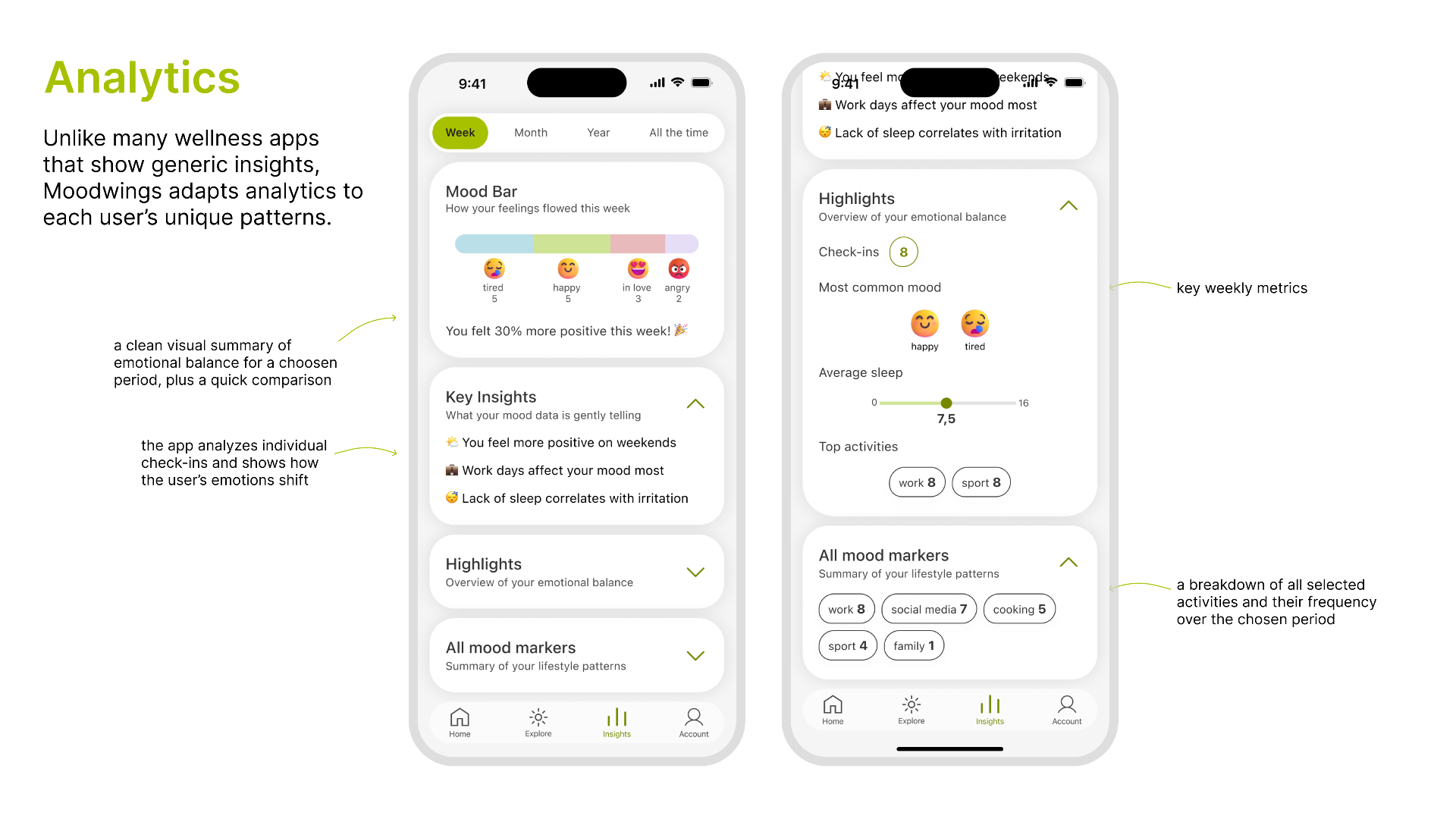
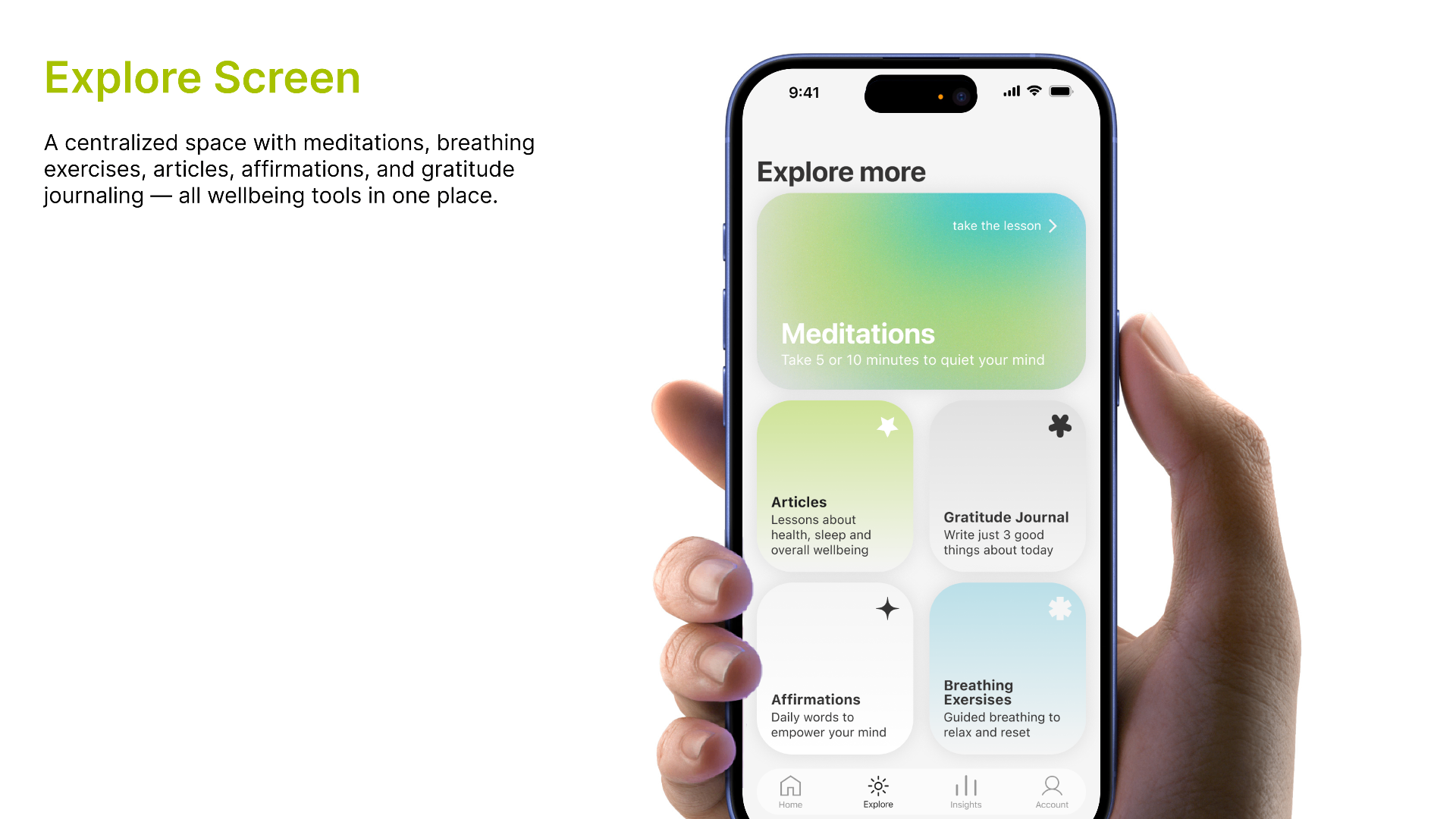
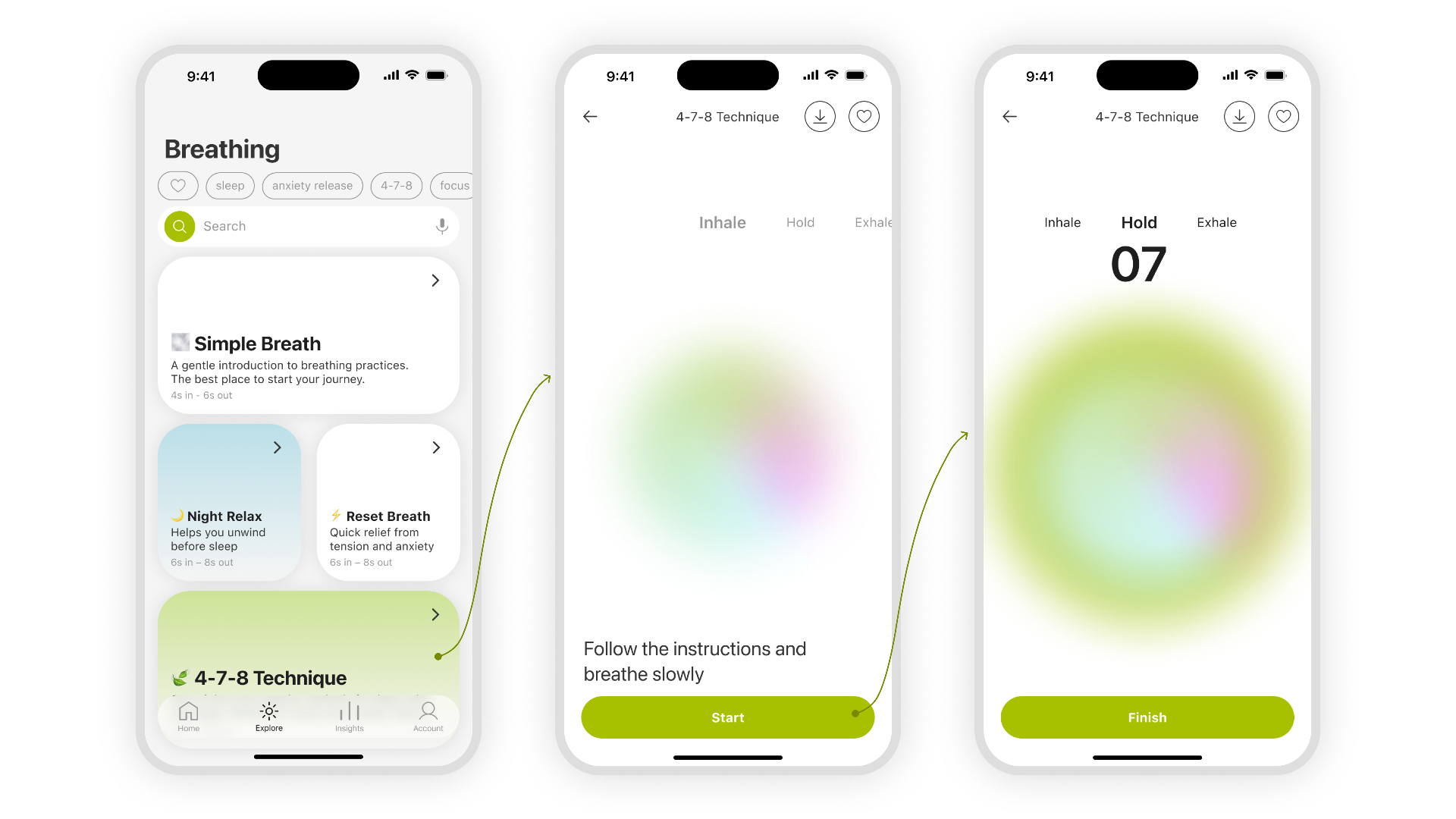
Final Screens
Main Flow
In the main flow, users log their mood, add daily context (sleep, activities, notes), review everything, and save their check-in—creating a clear emotional record for the day.